How to get your product into Woolworths or Coles
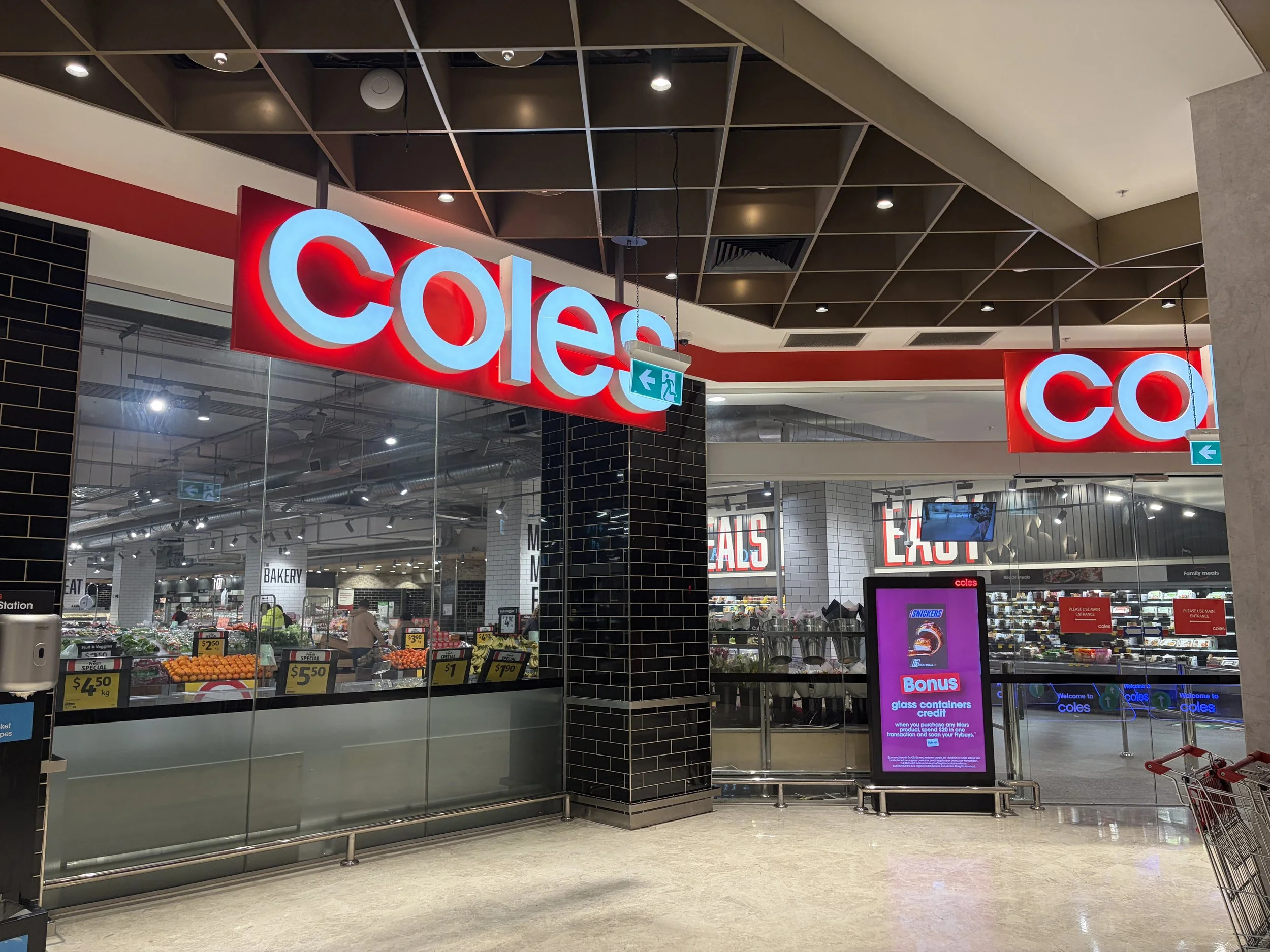
Getting your product into Woolworths or Coles is one of the most common goals for Australian FMCG founders, and one of the most misunderstood processes. The ranging criteria, the timeline and the supplier requirements can feel overwhelming. However, the thing that lets down most pitches isn't the product itself but rather the branding and packaging.
What retailers are actually evaluating
Category buyers at Woolworths and Coles are under pressure to justify every ranging decision. They're asking whether your product grows the category, whether it turns fast enough to justify the shelf space, and whether it fits the planogram. They're also assessing whether your brand looks credible enough to sit next to the brands already in that bay. A brand designed with only aesthetics in mind for online or Instagram would hardly be able to stand up against supermarket brands.
A pitch supported by packaging that looks considered and professional, shelf-ready, and category appropriate tells a buyer that you understand the retail environment. Packaging that looks like it was finished in a hurry, or designed without any reference to the competitive shelf will raise questions about the business behind it.
What Woolworths and Coles supplier requirements actually mean for design
Both retailers have technical requirements that packaging must meet before a product can be ranged. These include barcode placement and size specifications, minimum print quality standards, pack dimensions that work within standard shelf depths, and shelf-ready trays for certain categories. These aren't negotiable, and getting them wrong after a ranging approval creates problems that will delay your launch.
Beyond the technical requirements, there's the commercial reality of your packaging needing to work within a planogram. That means it needs to hold its own in a bay context, not just in isolation. A design that looks strong on a white background (or Instagram!) can disappear on a shelf crowded with 30 other products.
Why packaging is often what lets an otherwise strong pitch down
It's common for founders to invest heavily in product development and then treat packaging as something to sort out later. By the time a buyer meeting is on the calendar, the packaging often isn't ready, or it's at a stage that doesn't reflect the quality of the product inside. Unfortunately, buyers remember this and if your pitch relies on samples that look unfinished it creates uncertainty. The question "what will it actually look like on shelf?" should be answered before you walk into the room, not after.
What to have in place before you pitch
A high-quality physical mock-up, or at minimum a high-quality render that accurately represents the final pack. The branding should communicate your positioning clearly without needing explanation and the artwork should meet the retailer's technical requirements so there's nothing to fix between approval and launch.
Getting ranging ready isn't just about ticking supplier boxes but about presenting a brand that looks like it belongs in the category and is a genuine player amongst the competition.
If you're preparing for a ranging conversation with a major retailer, the Retailer Range Review Prep Checklist is a good place to start. And if your packaging needs work before you get there, get in touch to talk through where things stand.